AI and Robotics in Agriculture: Feeding the Future
How AI, robotics, and blockchain are revolutionizing farming to ensure food security for generations to come.
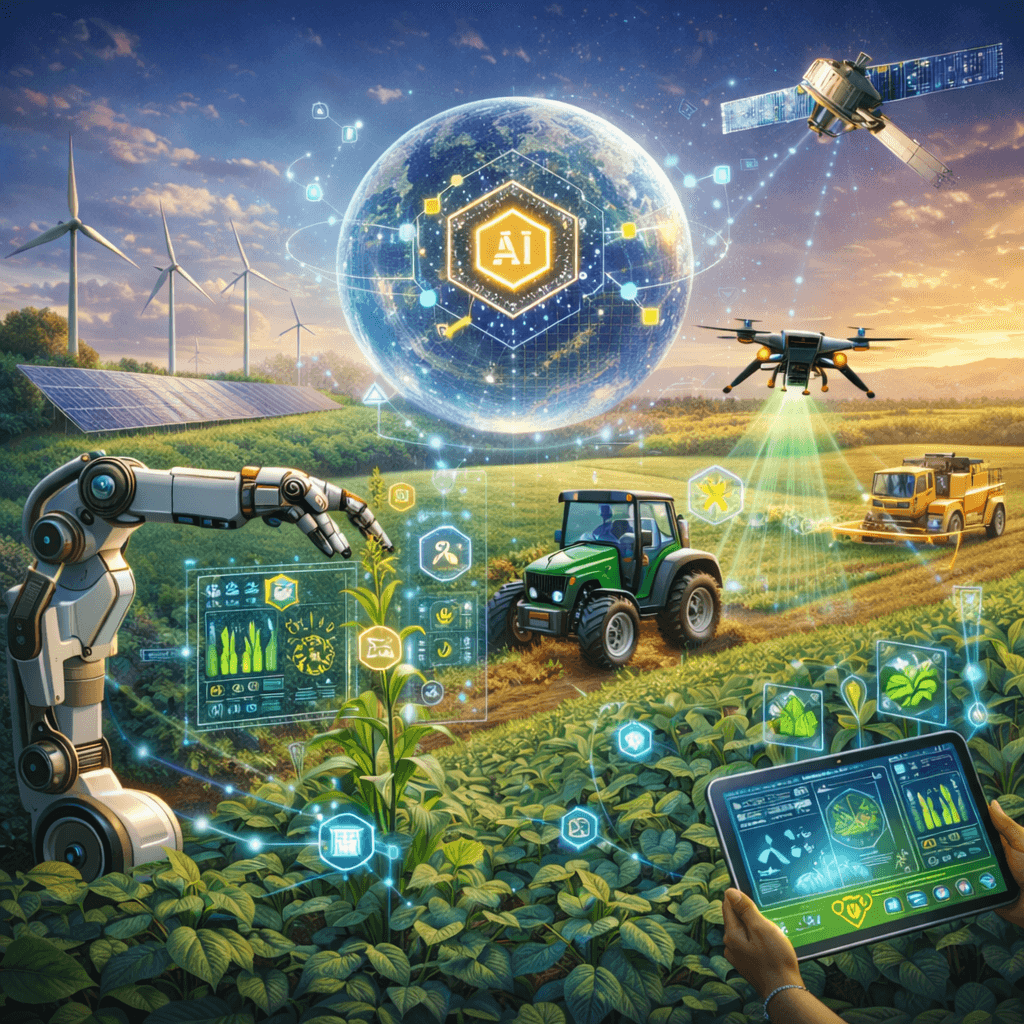
Agriculture is the backbone of human civilization, yet it faces unprecedented challenges: climate change, population growth, resource scarcity, and labor shortages. Traditional farming methods alone cannot meet the demands of the future. Enter artificial intelligence and robotics — technologies that promise to revolutionize agriculture by making it smarter, more sustainable, and more resilient.
AI-Driven Crop Monitoring and Predictive Analytics
Farmers have always relied on intuition and experience to predict crop yields and manage fields. AI enhances this process by analyzing massive datasets from satellites, drones, and IoT sensors. AI models can detect soil moisture levels, nutrient deficiencies, and pest infestations in real time. Predictive analytics help farmers anticipate harvest volumes, reducing waste and optimizing supply chains. AI can also simulate weather patterns and recommend crop varieties best suited for changing climates.
Robotics for Precision Farming and Harvesting
Labor shortages are a growing concern in agriculture. Robotics offers a solution by automating repetitive and physically demanding tasks. Self-driving tractors can plow, seed, and fertilize fields with pinpoint accuracy. Machines equipped with computer vision can identify ripe fruits and vegetables, harvesting them without damage. Robots can selectively remove weeds or apply pesticides, reducing chemical use and environmental impact.
Blockchain for Fair Trade and Farmer Empowerment
While AI and robotics improve productivity, blockchain ensures fairness and transparency in agricultural trade. Consumers can verify the origin of their food, ensuring it meets ethical and safety standards. Farmers can enter agreements with buyers that guarantee payment upon delivery, reducing exploitation. Blockchain-based platforms can provide small loans to farmers, empowering rural communities.
"AI and robotics are not replacing farmers — they are empowering them."
— Sathya Lakshmi Srinivasan
Challenges and Opportunities
Despite its promise, tech-driven agriculture faces hurdles including the cost of adoption for small farmers, training needs, and infrastructure gaps around reliable internet and electricity. Yet, governments, startups, and NGOs are increasingly investing in agri-tech hubs, subsidies, and training programs to bridge these gaps.
Feeding the future requires innovation, but it also requires values: fairness, inclusion, and resilience. At Quorum Chain, we believe technology should serve humanity, and nowhere is this more vital than in the fields that feed us.